I recently had the honor of speaking with astronaut Mike Baker on what I later learned was his 71st birthday.

With four Space Shuttle missions under his belt, two of which he commanded, Mike’s journey is packed with hard-earned wisdom—the intersection of knowledge and experience.
Here are five lessons I wrote down listening to his incredible life.
This is a story that shows us how resilience, preparation, and clarity of purpose can open unexpected doors – and in Mike’s case brought him to space!
Principle First
Wisdom /wiz · dm/ noun. The intersection of knowledge and experience.
1. Have a Plan—and a Backup Plan
“I always say it’s important to have a backup plan. I wanted to be a pilot. I applied for the Naval Academy, I applied for the Air Force Academy, and I applied for the Navy ROTC program.
And when I went to the University of Texas, I did pre-med for a semester, maybe two. I ended up taking four and a half years to get my degree because I took extra classes trying to cover my bases because I thought being a doctor would be kind of fun too.”
Mike’s Story: From a young age, Mike dreamed of becoming a Navy aviator, following in his father’s footsteps.
But when a high school skiing accident left him with a broken elbow, he faced a setback: the Air Force disqualified him from becoming a pilot.
Instead, he pivoted to aerospace engineering at the University of Texas and joined the Navy ROTC. This alternate path set him on a course that ultimately led him to NASA.
Takeaway: Life rarely goes exactly as planned. By having backup plans, Mike kept moving toward his dream, even if it took a different shape than he originally envisioned.
Flexibility and readiness make it possible to keep pursuing our goals, even when detours are necessary.
I recommend an infinite goal above your finite goals to give everything you do a unified context.

2. When You Work Hard, You Get Lucky
Mike’s Story: After graduating, Mike took an 8 week assignment aboard the USS Finback fast-attack submarine—a far cry from aviation!
But he worked tirelessly and soon earned qualifications as a division officer.
This hard-earned recognition opened the door to flight training, reviving his dream of becoming a pilot.
Takeaway: Hard work may not guarantee a specific outcome, but it can align us with opportunities.
While luck played a part, it was Mike’s consistent effort that made him “lucky” enough to reach his goal.
3. The more success you have, the more opportunity you get.
Mike’s Story: In Navy flight training, if you perform poorly, the Navy decides your aircraft and role. But if you excel, you get to choose.
Mike’s dedication paid off when he earned the chance to pick the A-7 Corsair II, allowing him to serve on the West Coast near his family.
Takeaway: Each success opens new doors. When we commit ourselves fully, we not only accomplish goals but also gain more control over our future.
In Mike’s case, excellence granted him choice, an invaluable asset in his career.

By Robert L. Lawson, U.S. Navy
4. You Don’t Get What You Don’t Ask For
Mike’s Story: Throughout his career, Mike found that expressing his interests to others often led to new opportunities.
After mastering carrier landings, he made his desire to become a test pilot known and earned a spot at Naval Test Pilot School. His two years as a test pilot and subsequent return as an instructor became critical steps in qualifying him as an astronaut.
Takeaway: Let people know what you’re striving for, and work hard at it. You’ll find that mentors, colleagues, and friends are more likely to open doors, offer advice, and help along the way.
5. We need to take care of our Earth.
“The thing that struck me the most is how deep dark black space is it’s the deepest darkest black I’ve ever seen.
The next thing to hit you right away is how thin our atmosphere is. How fragile looking our planet is. How beautiful it is. How small it looks. How interconnected everything is.”
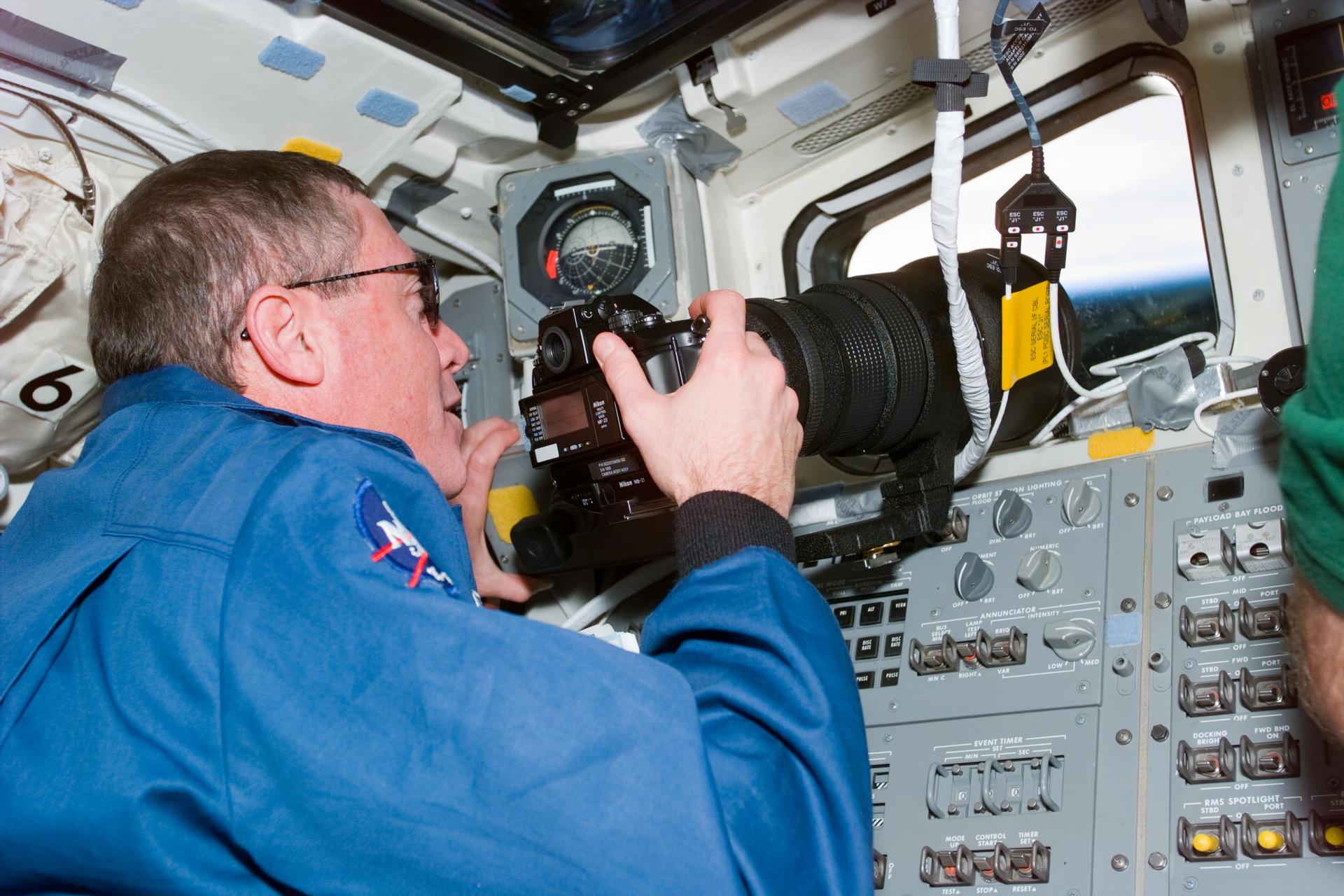
Mike’s Story: Mike remarked many times on how beautiful Earth looks from space. The planet is so blue, and space is “the deepest darkest black I’ve ever seen.” Earth’s atmosphere is so thin, it feels so fragile. “It really makes me want to take care of our beautiful planet.”
Mike recalled moments on his first mission when he caught a nighttime glimpse over the Yucatán Peninsula, seeing the Gulf of Mexico, the Florida peninsula, and the East Coast up to New York illuminated by city lights.
This perspective brought a profound sense of awe and interconnectedness.
Takeaway: Seeing Earth from space is a reminder of the thin veil that sustains life.
This view offers a unique perspective on the importance of protecting our planet—a fragile oasis in a vast, dark universe. It’s a humbling vision, and one that reminds us of our shared responsibility toward our home.
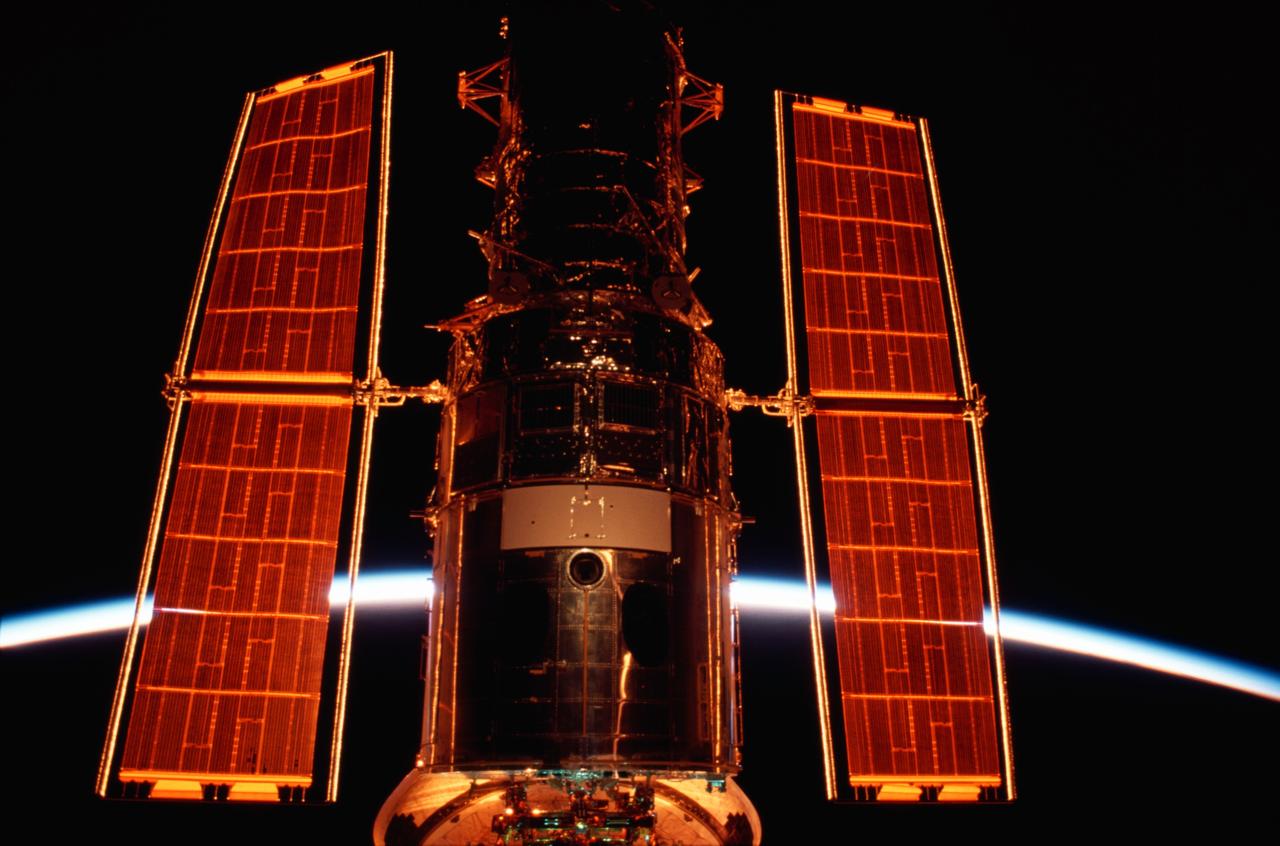
Final Thoughts: Mike’s life lessons remind us that wisdom doesn’t come solely from big achievements. It’s built from moments of persistence, unexpected paths, and the courage to ask for what we want. Whether or not we’re reaching for the stars, these principles apply to us all.
Also – Kennedy Space Center is more than worth the entry fee. It’s Disney Land for science nerds. I got to walk under the massive Saturn V rocket that launched all the Appollo missions to the Moon, I saw the real Space Shuttle Atlantis, purused the Rocket Garden. I spoke with Mike in their add-on “Chat With an Astronaut” and then went to hear him talk again in the daily “Astronaut Encounter” in the Universe Theater.
I already can’t wait to go back!
And I’ve got more lessons from space to write about including lessons from the two Shuttle disasters, both of which I watched live… Stay tuned…
NASA’s image library is amazing. I’m especially captivated by the photos from the James Webb Space Telescope.
