
Principle First:
Alignment /uh line muhnt/ noun.
1. The state of being aligned as in the proper positioning of machinery parts so that the entire machine produces its intended output.
2. The process of ensuring all team members share a common understanding and agreement on the goals and objectives, working cohesively towards the same outcome.
How many of you have thought “If only Human Resources did X” or “If only my IT team allowed this tool” or “If only the facilities organization had fixed this conference room”?
Now imagine all of those functions are aligned on the same goal as you.
Take a look at this graphic.

The intended direction, the solution to the problem is towards the right. But here, someone is headed in a different direction, aiming slightly above the intended target. They have a slightly different problem statement in their head, or a slightly different end goal. They are producing an outcome different from what you envisioned.
They are headed in the wrong direction, destined to give you a bad output. And if you’re not versed in Feedback or in Coaching, you’ll be fixing it. This is YOUR wasted energy because you haven’t gotten alignment.
Imagine being misaligned by 90°.

This work is 100% unproductive. All of this energy is wasted.
Counterproductive looks like a 180° misalginent.

It actually undoes the productive work of others. This is expensive. We need to recognize this and stop it quickly.
A team is defined as a stable group of individuals interdependent in achieving a shared goal.
The shared goal is the object of alignment.
Now picture a team aligned.

They all move in the same direction. Very little effort is wasted. Cost is low, speed is high. This team is flying. And they know it.
A shared goal can be the object of a delegated action item, or the output of a project. And when the projects are in service of a higher level goal, an infinite Mission everyone is enrolled in, the workforce is more engaged. They have a greater context for everything they do.
How Pixar Builds Alignment
Pixar is masterful and enrolling everyone in the same goal, thereby achieving the great synergies of an organization heading in the same direction.
Here is what they are aligned on:
Pixar’s Vision: “At Pixar, our goal is to make great films with great people.”
Pixar’s Mission: “Pixar Animation Studios’ Mission Statement is to combine proprietary technology and world-class creative talent to develop computer-animated feature films with memorable characters and heartwarming stories that appeal to audiences of all ages.”
Pixar’s Guiding Principles: Story is King, Trust the Process
The facility is designed to make films better. “I’ve never seen a building that promoted collaboration and creativity as well as this one.” – John Lasseter speaking about the Pixar facility. Does your facility feel this enabling?
Their technology is designed to make films better. Pixar developed hardware and software and in 2018, it had been used in 27 of the last 30 films to win the Academy Award for Best Visual Effects. Does your IT feel that enabling?
Pixar’s training is designed to make films better. Yet 86% of managers never get trained. And there are 10 million managers in the United States.
At Pixar, a newly hired barista gets the same first day experience as a newly hired director. They sit in the 5th row of the screening theater – this is where the directors sit – and they hear:
“Whatever you were before, you are a filmmaker now. We need you to help us make our films better.” (Coyle, 2018)
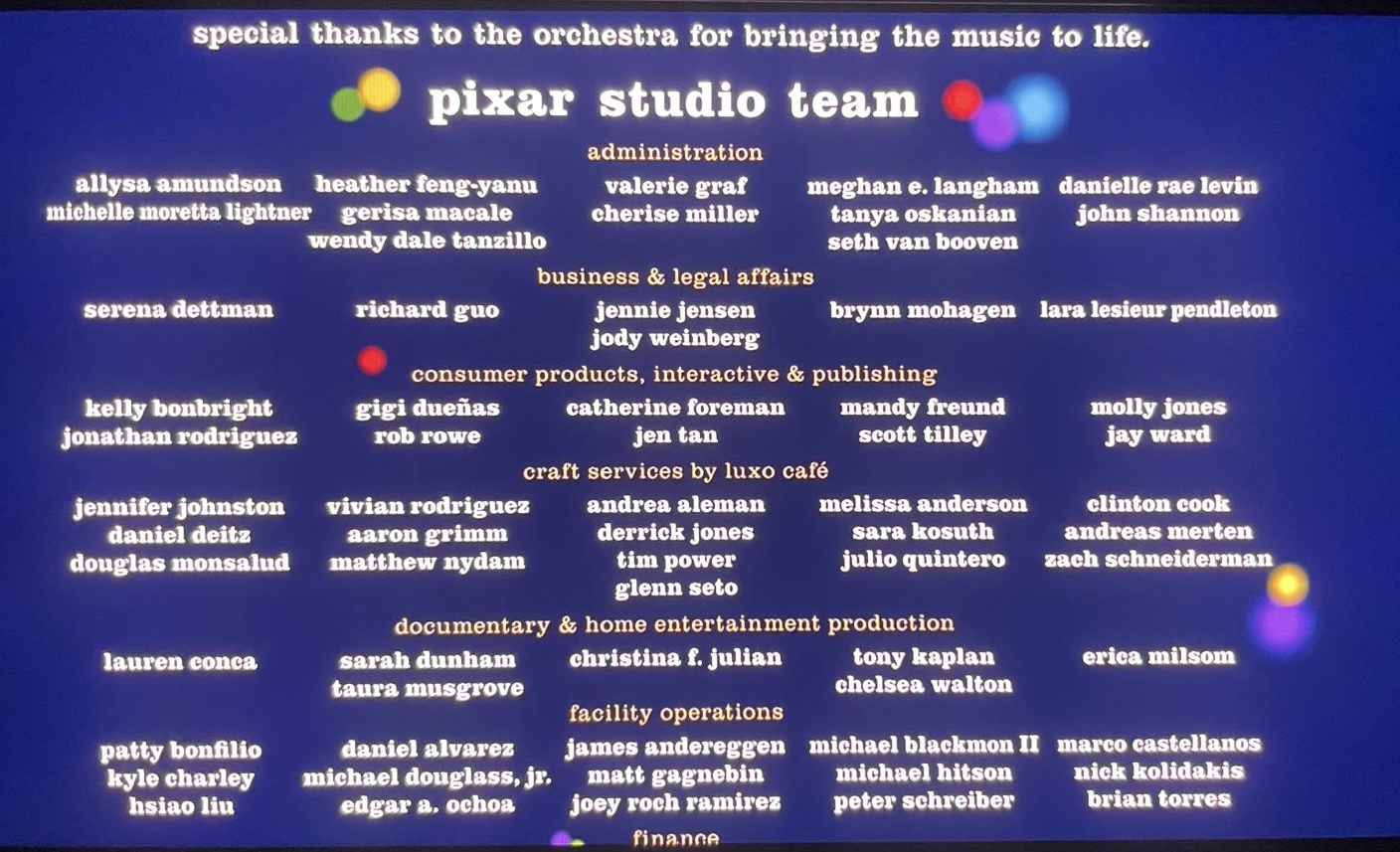
The baristas in the café are part of making the film – and stay until the end, you’ll see their name in the credits (craft services by luxo café). Any clashes between functions are in service of the same goal, not counter.
Micromanagement is when someone tells someone to place their right foot in front of their left, and then their left in front of their right. You are left with no autonomy.
But when a team is lead – when a team is aligned on a high level goal, when they feel they can achieve their own personal purpose in service of the team’s purpose, they operate independently in support of the same goal.
And the team is engaged.
🧠Today’s Framework: Mission, Vision, Values
📚Today’s Story: Jiminy Peak Ski Resort’s organizational alignment produces surprising results
📉Deep Dive: LinkedIn’s Mission and Vision statement
📝 Today’s Quote:
“The Collective Intelligence of most teams is beneath the Average Intelligence of it’s members.”
-Peter Senge“Leaders create things that didn’t exist before. They do this by giving the tribe a vision of something that could happen, but hasn’t (yet).”
-Seth Godin
🧠The Framework: Mission/Vision/Values
Mission: Why we are here
Vision: What we do to serve the Mission
Values: What we will not jeopardize to deliver
The Mission Vision Values statement is the highest level goal for any company or team.
The Annual Plan is in service of the Mission/Vision/Values.
The Quarterly Goals are in service of the Annual Plan, and therefore the Mission/Vision/Values.
The Weekly Objectives are in service of the Quarterly Goals.
Daily Tasks are in service of the Weekly Objectives.
All in service of the Mission/Vision/Values.

Ideally these are written at the company level. But this is so rarely done well.
You’ve already decided not to wait for your company to give you training for this job.
Don’t wait for your company to create this context for you.
Be the CEO of your team. Write one for your team.
I wrote my first Mission/Vision/Values statement when I had a team of 160.
Now I write one for any team size.
Here is the MVV for Lighthouse Leadership, a business of one. This guides all of my decisions:
Lighthouse Leadership MVV
Mission:
Lighthouse Leadership is dedicated to guiding new managers through the turbulent waters of early leadership. Our mission is to become a beacon of stability and guidance, helping managers navigate their roles with confidence and skill.
Addressable Opportunity:
There are 10.5M managers in the United States; 210,000 are engineering managers (Bureau of Labor Statistics)
60% of new managers fail in the first 24 months (Forbes).
82% of them never receive training (People Management).
Vision:
Our vision is to reduce the high failure rate among new managers by providing practical, concise, and actionable leadership frameworks and insights. We believe in a future where every new leader receives a foundational education and through that their teams thrive.
Core Values:
- Stability: Like a lighthouse, we aim to provide a steady source of support and guidance especially when the waters are turbulent.
- Clarity: We simplify complex leadership concepts into easily digestible frameworks.
- Empowerment: We equip managers with the tools and confidence needed to succeed.
- Community: We foster a sense of belonging and mutual support among new managers.
- Growth: We are committed to continuous learning and improvement for ourselves and our audience.
Can you see how this will direct all of my personal effort?
Can you see how I would bring someone else into the fold?
Can you see how I might outsource a website build? Or develop a course?
Let’s take a look at how LinkedIn scaled their company from 338 employees to 16,000.
📉Deep Dive: LinkedIn’s Mission and Vision statement
LinkedIn’s Executive Chairman Jeff Weiner talks about these concepts quite clearly. Weiner was the first non-founder CEO of LinkedIn.
From his LinkedIn profile:
Over 11 year tenure as CEO, LinkedIn grew its membership base from 33M to more than 690M, increased its revenue from $78M to $7.9B and expanded the team from 338 employees to over 16,000. – Jeff Weiner’s LinkedIn profile
He prepared LinkedIn for scaling by codifying the Mission, Vision, Addressable Opportunity, Strategy, Priorities, Measurable Objectives, Culture, and Values. This all fits on one page but I’ll just use his definitions of Mission and Vision as he described to a Stanford University course called Blitzscaling in 2015:
Mission: a dream, it’s True North. If it’s done properly, it’s really something that everyone is reaching for. Doesn’t necessarily get operationalized, it’s a shared sense of purpose.
- LinkedIn’s Mission: Create economic opportunity for every member of the global workforce. (3 Billion people)
Vision: Overarching objective that everyone can participate in. It should be measurable, realizable, and inspirational.
- LinkedIn’s Mission: Connect the world’s professionals to make them more productive and successful.
LinkedIn’s founder, Reid Hoffman, did not codify the company’s Vision, he lived it and through his direct leadership, and while the company was relatively small, 338 employees, it manifested into the company.
It got codified when it was time to scale rapidly to 16,000.
And we can easily see how LinkedIn Vision and Mission statement manifests into the business, aligning all of their efforts, their aquisitions, their projects large and small.
📚The Story – Case Study: Jiminy Peak Mountain Resort
Ski resort Jiminy Peak, in Hancock, MA has a Vision and Mission Statement:
Vision:
Jiminy strongly believes in preserving the earth for future generations. Together we can shape a community for the future.
Mission:
To provide positive, memorable Mountain Resort experiences with outstanding, friendly and helpful service in remarkably beautiful surroundings inspiring guests to return again and again.(Jiminy Peak. “Sustainability.” Accessed January 21, 2024.)
Jiminy Peak have undertaken a number of discrete projects in the service of this vision and mission statement.
The most visible is the $4M, 386 foot tall wind turbine dubbed “Zephyr” which they installed in 2007.
Jiminy Peak’s yearly revenue is $20M. Investing 20% of that in a single project is an enormous undertaking. It requires an allocation of funding, of physical space for installation and maintenance access, it ties in to the electrical services for the resort. It qualified for federal tax rebates, renewable energy credits, and a $582k grant from the Massachusetts Technology Cooperative.
Each of those programs would have set requirements on the project which, if not fulfilled, will not be paid.
Each of these aspects and stakeholders would have been documented on a Charter. It will have been signed by a Sponsor, surely a member of the Executive team who can allocate the resources required to execute these projects.
This finite project was an enormous success when weighted against the infinite goals stated in the V&M statements.
It helps serve the “memorable Mountain Resort experiences” as Zephyr is a popular selfie spot; employees wear pins with a turbine emblem on them; school groups tour the site. (Lillian, Betsy. “Massachusetts Ski Resort Celebrates A Decade Of Wind Energy.” North American Windpower, August 22, 2017.)
The 4.6 GWh of energy the turbine produces annually offsets the emissions of 7.1M pounds of CO2 serving the “preserving the earth for future generations” statement.
The $4M investment was recuperated 10 years ago, now saving $1M yearly for the business. If they had a 10% annual profit margin before this investment, they’d be at 15% now.
This project was so successful, the owners of Jiminy Peak founded a new business venture called EOS Ventures multiplying the business upside, and multiplying the environmental values described in that vision statement.
Brian Fairbank, CEO of Jiminy Peak noted, “When we installed our turbine there was no roadmap, no company had done this before. We gained such knowledge during our own process and now want to fulfill a need for others.” Since the installation of the Jiminy Peak turbine, Jiminy Peak management has received numerous calls from other companies and organizations also looking for ways to reduce their energy consumption from the grid. With such a strong demand for alternative energy sources in the nation and a requisite for the “how to” and funding, EOS Ventures, LLC was formed. (EOS Ventures, LLC. “Press Release: EOS Ventures, a New Beginning.,” March 6, 2008.)
Jiminy Peak was able to use it’s Vision as a lens to determine the projects it invested in, and it paid off in multiples.
And it took the entire company to execute.
📕1 Book, 🎧 1 Podcast, 📺1 Video, 📰1 Article
Here’s the best stuff I’ve found while researching this.
📕 Today’s Book
Michael Hyatt’s has an easy to read and pragmatic guide to developing a Vision and implementing it. Read it here. Please buy in your local bookstore. They won’t survive without you.
🎧Today’s Podcast:
LinkedIn founder Reid Hoffman’s podcast Masters of Scale talks about preparing a business for rapid growth. In this episode, he sits with the Jeff Weiner who Hoffman hired to scale LinkedIn from 338 to 16,000 employees. My favorite quote: “To create an environment or team that is inspired, you need 1) The clarity of vision, 2) the courage of one’s own conviction, and 3) the abilitiy to effectively communicate these two things.” Masters of Scale Episode 48 (Apple Podcast link) (40 minutes)
📺Today’s Video:
Whenever I’m reading Peter Senge’s book the Fifth Discipline, I wonder why I bother with anything else. The Five Disciplines are 1) Building a shared vision, 2) Systems thinking, 3) Mental models (i.e. Frameworks!), 4) Team learning, 5) Personal mastery. This Senge talk is focused on the environment – look at how well he can describe huge topics using 4 numbers on a whiteboard. I know I’m inspired to take action. Watch on YouTube here. (17 minutes)
📰Today’s Article:
Peter Stroh and Charles Kiefer describe how an organization capable of “inspired performance” is built by 1) having a deep sense or purpose, 2) alignment of individuals around this purpose, 3) an emphasis of personal performance and an empowering environment, 4) structures and systems and 5) a capacity to integrate reason and intuition. Read here. (17 pages)
[^fn1]: Coyle, Daniel. 2018. The Culture Code: The Secrets of Highly Successful Groups. New York: Bantam Books.
Isaacson, Walter. Steve Jobs. New York: Simon & Schuster, 2011. Page 431.