The Core Distinction
Leadership and management are often used interchangeably, but they serve fundamentally different purposes in an organization. Leadership sets the vision, defines the outcome, and establishes the framework. Management ensures execution, reduces variation, and optimizes processes to deliver results efficiently.
To put it simply:
- Leadership decides what needs to happen and why.
- Management determines how to make it happen.
Consider a personal example:
- Leadership is deciding that my kids should learn how to swim.
- Management is getting them to lessons on time, ensuring we know where their swim gear is, and making it a consistent routine.
Or, in broader business terms, as Peter Drucker said:
- Leadership is doing the right things.
- Management is doing things well.
These can be executed by the same person, but these are two different modes of thought. Very few understand this, and fewer do both well.
It is imperative that leadership must preceed management. The direction must be set before setting people off to do work. If the team is not aligned first, they’ll head off in different directions, however well meaning.
This means kickoff is the most important phase in the program.
You don’t just start driving before you know where you’re going. But this website is full of case studies just like that. We do this with teams all the time.
I’ll continue to beat the drum: write that charter. And now, use AI to help.
Case Study: Domino’s Pizza Transformation
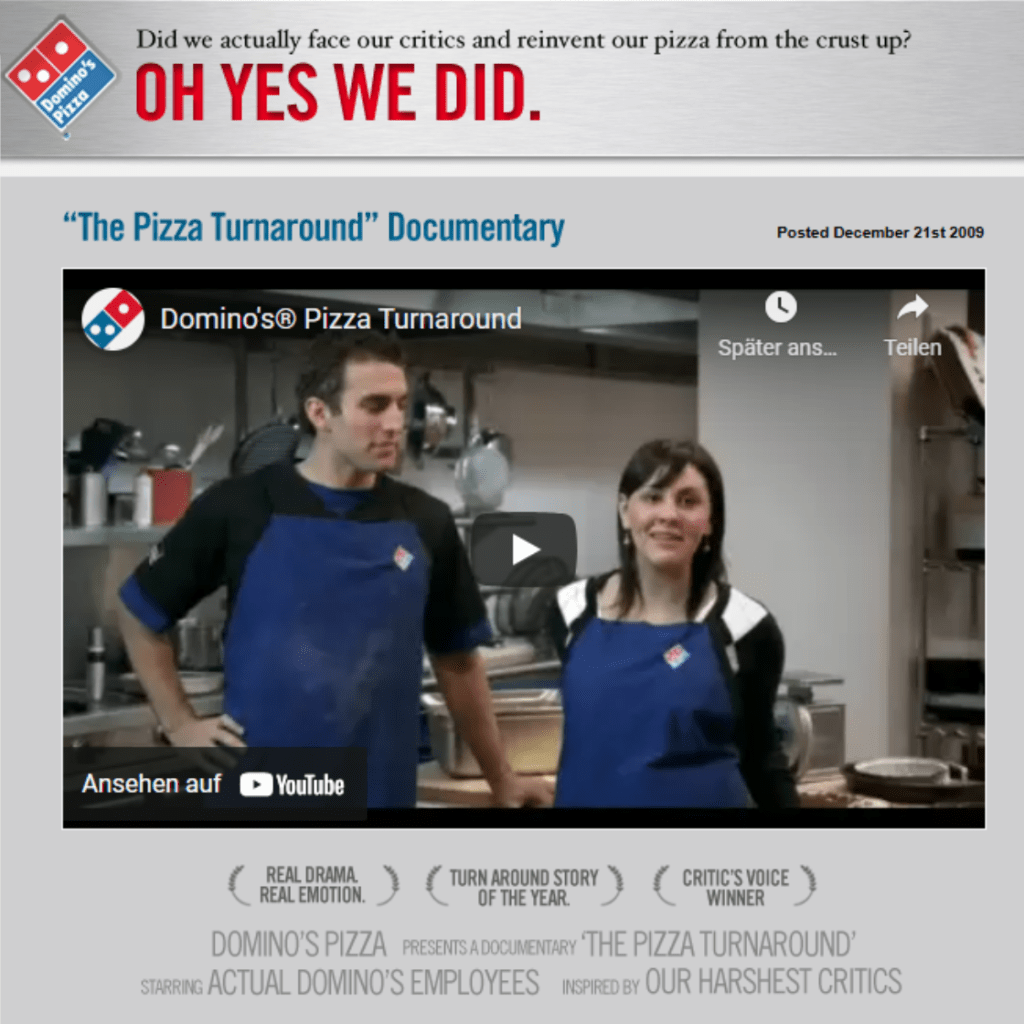
In 2009, Domino’s Pizza faced a crisis. Customers criticized their pizza, calling the crust “cardboard” and the sauce “ketchup.” Sales stagnated, franchisees struggled financially, and Domino’s ranked last in taste among U.S. pizza chains. CEO Patrick Doyle made a bold decision: rather than just improving marketing, the company needed a complete overhaul.
This was a leadership decision—recognizing the need for radical change, setting a new direction, and committing to transparency throughout the transformation process.
The Leadership Move: A Public Reinvention
Domino’s launched an 18-month reinvention strategy, openly admitting their product was subpar. Through a combination of research, customer feedback, and food science, they developed an entirely new pizza recipe. But what made this approach unique was how they embraced the challenge publicly:
- Marketing Transparency: Domino’s aired commercials acknowledging their past failures, showing executives reading harsh customer feedback on camera.
- Customer-Centric Product Development: They implemented real-time customer reviews on their website, demonstrating accountability.
- Radical Honesty: Their campaign slogan, “Oh yes, we did,” directly addressed consumer criticism, transforming their weaknesses into a rallying point for change.
The Management Execution: Running the New Domino’s
Reinventing the pizza recipe was only half the battle. Ensuring every franchise consistently delivered on the new formula required flawless management. This type of thinking minimizes variation by enabling the delivery layer to consistently deliver the intended results to the customers.
This included:
- Standardized ingredient sourcing and preparation.
- Training staff to follow the new recipe.
- Implementing quality control processes to ensure consistency across locations.
- Creating operational efficiencies to maintain fast delivery speeds while improving taste.
The reinvention only works when leadership first sets the direction and management then executes it. Alignment is a prerequisite to empowerment!! (Ah hem! Write that charter!! And use AI to save yourself time!)
Applying This Framework in Your Organization
Organizations often falter when leadership and management are misaligned. Strong leadership without solid management leads to grand visions with poor execution. Conversely, strong management without leadership results in efficiency without purpose.
Key Takeaways:
- Great organizations know the difference and empower both Leadership and Management:
- This is a distinction between ways of thinking, not roles.
- These are often separated by roles – a manager below executing the direction set by the leader above. But each provides leadership, sets direction, for those below.
- Leaders must define the big picture.
- Establish clear goals and direction – do this in a team charter.
- If this is a simple action item, delegate well.
- Managers must drive execution and optimization.
- Create processes that make success repeatable.
- Reduce variation and ensure the team delivers the committed results on the committed timeline.

1 thought on “Leadership vs Management – and Dominos Pizza”