
5 Hard Questions That Build Trusted Teams: The After Action Review
The five questions Navy SEALs ask after every mission — and the template I use to run them with leadership teams in forty-five minutes.
If you’ve never run an After Action Review — or you’ve run them and watched nothing change — this is the framework.
Five questions Navy SEALs ask after every mission. The template I use to run them in forty-five minutes.
The questions are simple. The discipline of running them well is what separates teams that learn from teams that just have meetings about learning.
The 5 After Action Review Questions
- What were our intended results?
- What were our actual results?
- What caused our results?
- What will we do the same next time?
- What will we do differently?
That’s the whole framework. Memorize the five and you have the method. Everything that follows is refinement — how to use them, what makes them work, where they go wrong.
Learn like a Navy SEAL.
Get the After Action Review template — the 5 questions elite teams ask after every mission. Free, runnable on Monday.
Free. No spam. Unsubscribe any time.
Where the After Action Review comes from
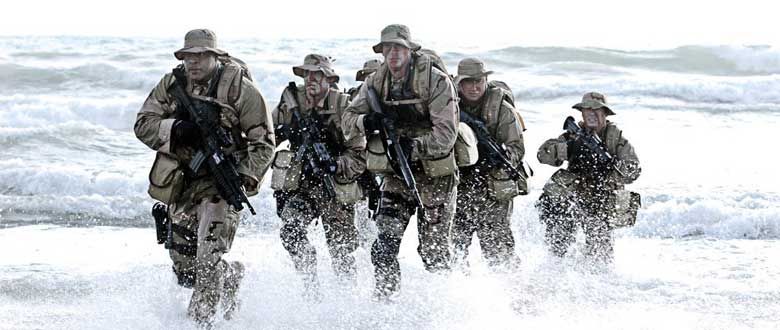
The After Action Review started as Army doctrine. TC 25-20, the Army’s leader’s guide, formalized it in 1993.[1] It has since traveled to Navy SEAL teams, hospitals, hedge funds, and any organization serious about learning.
The version most leaders know comes from Dave Cooper, the former Navy SEAL Team Six leader Daniel Coyle profiles in The Culture Code.[2] Cooper didn’t invent the questions — TC 25-20 already had them. He built the culture that made them work. From Coyle:
One of the useful tools was the After‑Action Review… AARs happen immediately after each mission and consist of a short meeting in which the team gathers to discuss and replay key decisions. The goal is to figure out what really happened and talk about mistakes — especially their own. Rank gets switched off, humility switched on. You’re looking for that moment where people can say, ‘I screwed that up.’ In fact, I’d say those might be the most important four words a leader can say: I screwed that up.
Two phrases in there carry the whole weight: rank switched off, humility switched on. The questions don’t do the work. The room does.
How I use this with leadership teams
I’m not training operators for direct-action raids, and I’ve learned to be careful importing military jargon into the office — most of it doesn’t translate and the rest sounds like cosplay. But the After Action Review translates after almost anything: a field installation that worked, a field installation that didn’t, a customer meeting, a hiring round, a launch. The reason isn’t the military pedigree. It’s that we don’t learn from experience. We learn from reflecting on it. You have to be active to learn.
Martin Luther King, Jr. put it plainer than I can[3]:
It is the strangely irrational notion that there is something in the very flow of time that will inevitably cure all ills. Actually, time is neutral. It can be used either destructively or constructively.
Leadership teams have to fight harder for honesty than SEAL teams do. A SEAL team has a forcing function — the next mission, life or death. A leadership team can rationalize indefinitely. Companies don’t usually fail in a crash; they fail in a long, deniable slide. The AAR is the forty-five-minute structure that interrupts the slide.
Four changes I make versus the canonical military version:
- I run them on a schedule, not just after disasters. Every quarterly cycle. Every product launch. Every meaningful hiring round. The AAR after a win is often more useful than the AAR after a loss — the wins are the patterns you want to make deliberate.
- I separate the facilitator from the team lead. The person who ran the operation can’t also run the conversation about it; the conflict of interest is too sharp. A peer leader, a chief of staff, a coach — someone whose job in the meeting is to protect the room, not defend the work.
- I focus on outcomes, not people. Not “You burned the pizza, you need to do better.” Instead, “The pizza was burned and the customer was disappointed — what kept us from watching the oven?” Same situation, different question. The first ends in apology. The second ends in a change.
- I write down decisions before we adjourn. Not “we discussed it.” Decisions, with named owners who said the words out loud, with a signal that will tell us next time whether the change worked. If the change list reads like generic advice — “communicate better,” “plan more carefully” — the AAR isn’t finished.
If you’ve used the Delegation Framework, the delegation brief itself answers question one — what were our intended results? Expect to find delegation defects in the AAR. You set the brief; the work shows you what was missing from it. Both frameworks get sharper every time you use them together.
A worked example
Here’s how a forty-five-minute AAR plays out for a real one.
In 2019 my team combined our annual family night with the food truck rodeo we’d been running for two years. Both events had reliably pulled 700 to 900 people on their own. We expected the combined version to be our biggest yet. It wasn’t. We ran the AAR a week after the event with four of us in the room — Brynne, Missy, Allie, and me.
Question 1 — Intended results (5 minutes). “Combine the two events — 700 to 900 attendees historically on each side. Expect a record turnout. Families grab food on the way in or on the way out, stay through the program.” Reconstruct the original objective before grading the work. Don’t let memory rewrite the target.
Question 2 — Actual results (10 minutes). “Every vendor called it the slowest event we’d run. Capital Q BBQ had sold out at every prior event; this time they didn’t. Grampie’s Hot Dogs drove home with a car full of buns. Our cafeteria contractor — set up in a tent because they don’t operate a truck — sold three items and threw away burgers and clam chowder. The returning vendors all said the relationship was intact and they would come back. Survey feedback praised the concept and asked for more kid-friendly options.” Get the facts on the board. What happened, what didn’t, what surprised us. Observations only, no interpretation yet.
Question 3 — What caused our results (10 minutes). This is where the team’s collective model of the work gets sharper. The facilitator pushes past first answers. “It was hot” isn’t a cause — ask what we controlled. We named four. Time window: 3:30 to 7 PM. Three and a half hours turns an event into a service. The prior lunch events had run 11 to 1 — concentrated, a real break in the workday. Location: the parking lot. An aisle ninety by two hundred and seventy feet, no shade on a hot day, far from the main entrance, sitting on the parking families needed. We’d picked the lot to spare the vendors the security and safety hurdles that come with setting up between the buildings — citizenship checks, contractor safety training, no phones inside, cash only. Two vendors told me later the hurdles are worth it. A captive audience between buildings beats a slightly less hassled vendor in a back lot. Vendor count: seven vendors sized for a thousand people moving through at one per minute. The crowd was smaller; every vendor sat idle. The tent: our cafeteria contractor doesn’t run a truck. We set them up under a tent. Months later another vendor told me his sales had tripled the year he moved from a tent to a truck. The tent reads as cafeteria. The truck reads as event. The most useful AARs spend the bulk of their time here.
Question 4 — What we’ll do the same (10 minutes). “Keep using our incumbents. Six of the seven vendors that day were returning. Flavors of Lebanon had pulled out of another booking to be there — that relationship matters more than any single event. Keep offering food at family night. Survey response was positive. The concept worked. The execution didn’t.” Strengths to sustain, deliberately. Most teams skip this question, which is a mistake: if you can’t name what worked and why, you can’t reproduce it. Wins from the last cycle become accidental wins from the next one.
Question 5 — What we’ll do differently (5 minutes, plus 5 to write it up). Five commitments. Each got a named owner and a signal in the worksheet; the list itself:
- Run the next event for two hours, not three and a half. Either 11 to 1 at lunch or 4:30 to 6:30 in the evening so families can grab dinner and get to the program.
- Move the footprint between the buildings. Accept the security and safety hurdles we’d been avoiding — they buy us twelve feet of building shade, a captive audience, and the cafeteria a few steps away.
- Five vendors, not seven. Right of first refusal to incumbents.
- Brief every incumbent before invitations go out. No vendor should learn about a date from a competitor.
- Anchor lunch events to Third Thursday — the monthly downtown street festival — so vendors have a backup market for whatever they don’t sell on our site.
Each commitment names a person, a verb, and a signal. If it doesn’t fit that shape, it isn’t a commitment yet — it’s an aspiration.
That’s the whole arc. Ten minutes on the long questions, five on the short ones, one written record at the end.
That was the first AAR I ever ran. I’d founded the volunteer organization a few years earlier — a group that helped new employees find their footing — and I picked it as the place to try the format. I didn’t yet have the confidence to bring it to a technical team at work. The room came in deflated. Two years of successful food truck events; one that flopped; some of us wanted to pack it in. We didn’t. We learned what actually makes one of these events work. It’s been running every year since — ten years now.
Common After Action Review pitfalls
In ten years of running these with leadership teams, the same five mistakes keep showing up.
- Skipping question 1. The team starts with what happened and never reconstructs the target. Without the target, every assessment is rationalized. Question 1 is non-negotiable.
- Collapsing question 2 into question 3. What happened gets mixed with why it happened. The facilitator has to hold the room on observations before causes. “Capital Q didn’t sell out” is an observation. “We picked the wrong window” is a cause. Mixing the two corrupts both.
- Praise instead of diagnosis at question 4. “The team really gelled” is a thank-you, not a same. Press for the specific behavior, decision, or condition that produced the win. If you can’t name it, you can’t replicate it.
- No owner on question 5. Three changes, none of them attached to a name. None of them happen. Every commitment gets a person, a verb, and a date or signal — or it doesn’t go in the worksheet.
- Running it weeks later. Memory has already rewritten the event. The AAR works in the days after, not the weeks. If you can’t run it within a week, run a shorter one inside forty-eight hours.
When NOT to run an AAR
After Action Reviews are not free. A bad one is worse than none — it teaches the team that the ritual is theater, and the next one will be theater too. Skip the AAR when:
- The event was small. A stand-up that ran five minutes long doesn’t need an AAR. A failed stand-up culture does.
- The team is in active crisis. An AAR needs enough quiet in the room to look at the work honestly. If the fire is still burning, run the AAR after.
- The leader can’t hold the room. If the senior person can’t go first with “I screwed that up,” the AAR will collapse into deflection. Coach the leader before the meeting, or hand facilitation to a peer.
- There’s no decision to make. AARs produce commitments. If nothing is going to change as a result of this meeting, you’re running a debrief, not an AAR. Debriefs are fine — just don’t call them AARs.
For your first AAR
If this is your first After Action Review, five tips that will make it go better than it has any right to.
- Set a hard timebox. Forty-five minutes for a complex event, thirty for a single sprint, fifteen for a stand-up retro. The timebox forces prioritization.
- Designate three roles before the meeting. Facilitator, note-taker, timekeeper. Anyone can hold them; no one should hold two at once.
- Read the question aloud before each section. It sounds formal. It works. The question on the wall keeps the room from drifting.
- Write down decisions before adjourning. Two pages is plenty. The written record is what makes the next AAR sharper than this one.
- Schedule the next AAR before this one ends. The follow-through is the real point. An AAR with no follow-through is a meeting; an AAR that produces a tracked change is a learning system.
The After Action Review template
If you’ve read this far, you’re going to run an After Action Review. Take the field guide with you.
The After Action Review Field Guide is twelve pages. An opening argument. The five questions on a single reference card. A four-step process. The conditions that make the room safe and timed. A one-sheet timekeeper’s reference you can print and keep in front of you. Four pages of facilitator prompts, one per question. A fillable worksheet you can hand to the team. Free.
Pain plus reflection equals progress.
The AAR is one of the smallest, most reliable structures I know for turning experience into judgment.
Forty-five minutes. Five questions. A written record. Run it.
- [1]U.S. Army. Training Circular 25-20: A Leader’s Guide to After-Action Reviews. Department of the Army, September 1993. ↩
- [2]Coyle, Daniel. The Culture Code: The Secrets of Highly Successful Groups. Bantam Books, 2018. ↩
- [3]King, Martin Luther, Jr. Letter from Birmingham Jail. April 16, 1963. ↩
- [4]Dalio, Ray. Principles: Life and Work. Simon & Schuster, 2017. ↩