
Part 1: Understanding Resilience and Its Importance
Let’s talk about resilience, what it looks like, how to build it in ourselves, how to build it on our teams.
This is Part 1 of a 3 part series. Here’s where we are headed:
𝗣𝗮𝗿𝘁 𝟭 (this post):
Resilience cannot be built without stress.
Resilience cannot be built without rest and reflection.
I’ll share some stories of personal stress.
I’ll share how I reflected on those experiences, and the tools I’ve put in my toolbox.
I’ll introduce 5 frameworks that help with resilience in a professional setting.
I’ll share a story that ties these five Frameworks into a single conversation in a tense meeting.
I’ll describe how to build resilience within a team. I call this Collective Resilience.
I’ll introduce four simple frameworks that can help tie individual resilience into team resilience.
Ready?

OK, into Part 1!
Let’s start with First Principals – a definition from Merriam-Webster dictionary:
Resilience /ri-ˈzil-yən(t)s/, noun. 1: the capability of a strained body to recover its size and shape after deformation caused especially by compressive stress (like a rubber band). 2: an ability to recover from or adjust easily to misfortune or change.
Both definitions feel relevant to me in the context of personal and collective resilience.
A rubber band can stretch, and will return to it’s original shape when the tension is released. Pull it to far and it snaps.
Most of us have pulled on a rubber band. Here is a slightly more complex analogy, I hope you can extend what you know about rubber bands to the properties of metal which better illustrates resilience in humans.
Like a rubber band, a spring will stretch under tension, and when the tension is released it will return to it’s original shape. Pull it too far – past it’s “elastic deformation” limit, and it will enter “plastic deformation”. This is when the shape will change permanently.
Try this with a paper clip – give it enough of a flex to slide 5 or 10 pages of paper in it. The paper clip springs right back. Now bend it further – it will not return to it’s original shape.

Yes, this is a bent paperclip
Something interesting about metal: when you first deform it, it gets stronger which is called “work hardening”. As it gets stronger, it also gets less flexible and more brittle.
You can see this with kitchen foil. It’s very easy to bend off the roll, it is soft. Crumple it up into a ball. It becomes harder to uncrumple it. The metal has actually become stronger under this stress you’ve applied.

This is exactly why a sword is hammered into shape. The stress makes the blade stronger. Deform the metal too much, it breaks.
Such is life.
We cannot build resilience without exposure to stress.
But we have to allow ourselves to return to our natural shape – we cannot be in the stressful environment too long or we’ll break. We need time to rest and to reflect.
And through that rest and reflection, we grow stronger.
I had a bike crash last Thursday. It was the hardest I had ever crashed. I’m writing from the South Bank of the Thames River in London preparing for a 100 mile bike ride tomorrow, just 9 days after my crash.
This is resilience.
But it’s harder to see some other elements of the resilience.
There’s more to just getting back on the bike.
Resilience Tool 1 – Rest:
“You cannot sharpen the axe if you are always chopping wood.” Reid Hastings, founder of Netflix
Sleep is a magical tool. When we sleep our body recovers physically and mentally.
I’ll explain the mental recovery assuming the physical recovery is more obvious.
“Practice does not make perfect. It is practice, followed by a night of sleep, that leads to perfection.” – Matthew Walker, Why We Sleep
Our short term memory is stored largely in the Hippocampus. It fills up during the day and empties at night while we sleep.
On the way to the bin, the brain examines each memory and separates the important from the unimportant.
The memories deemed unimportant go to the bin. This is why we often cannot remember what we had for lunch yesterday.
The important memories gets simplified and then hung next to similar ideas in the Long Term Memory, largely in the Neo Cortex.
Matthew Walker’s research shows skipping sleep after learning prevents us from ever storing that learning long term. We can never catch up from a learning perspective. If we do not empty the short term memory, the brain will just overwrite previous memories. And if we don’t get the right sleep, specifically mREM where the short term memories get put into long-term memory. We’ll have to re-learn.
Re-learning often means repeating the origina mistake. It’s easier to learn from it the first time.
By contrast, if we reflect on our learning before sleep, we’ll better prepare ourselves for the sleep and our retention will be higher. This brings us to Tool Number 2.
Resilience Tool 2 – Reflection:
“It is the strangely irrational notion that there is something in the very flow of time that will inevitably cure all ills. Actually, time is neutral. It can be used either destructively or constructively.” – Martin Luther King, Jr., Letter from Birmingham Jail
Rest comes with time. But we need more than rest to build resilience.
“We do not learn from experience. We learn from reflecting on experience.” – John Dewey
I am still bruised 9 days after the crash. And the skin on my arm is still healing.
Three days after the crash I rode 66 miles. I rested for a couple days, but I also reflected.
I realized the caused my crash in that reflection:
When I started cycling, I’d ride 2-3 times in a week. And I’d maintain my bike before and after each ride.
Now I am riding 6-10 times per week. I am not maintaining my bike before and after each ride. This is what caused my crash – my tires were worn, and my tire pressure was low.
So an important part of my resilience demonstrated by bouncing back in 3 days, is retooling myself.
This is something I can control: I changed my tires, I’ve marked the starting mileage of the tires. And I’ve promised myself to check my tire pressure every morning which only takes 2 minutes.
Reflection tool 1: Writing
I reflect using a journal after meetings.
I reflect on my day in my journal every night.
And I reflect on my week on Fridays.
A smartphone voice memo can be an excellent reflection. My memo’s go to Whisper.AI and I get a transcription back. I often ask ChatGPT to summarize those transcriptions which has been very helpful in my reflection. Reply to this email if you want to know more.
My LinkedIn and my newsletters are full of reflection.
Reflection tool 2: AAR
This is the reflection tool I know for major events I use same tool the elite Navy SEALs use to reflect after a mission when I have events of particular complexity.
This is called “After Action Review (AAR)” (See full post here.)
- What were my intended result?
- What were my actual results?
- What caused my results?
- What will I do the same next time?
- What will I do differently?
In the case of my bike crash:
- What were my intended result? A sharp right hand turn at 24 mph to seal a sub-30 minute ride to work.
- What were my actual results? I crashed in the final mile.
- What caused my results? My speed was too high combined with too-casual maintenance – worn tires, low tire pressure.
- What will I do the same next time? I’ll take the same route, the safest and most direct I know.
- What will I do differently? I’ll maintain my tire pressure every day. I’ll change my tires every year. I’ll clean my bike at least every week. The sub-30 minute ride will occur in the first 9 miles of the ride, not just on this turn.
Reflect on a recent challenging experience. How did it impact you, and what did you learn?
Send me an email, I’d love to hear about.
See Part 2, Professional Resilience here
See Part 3, Collective Resilience here
PS.
Resilience isn’t limited to humans.
Trees also require stress to grow strong.
Biosphere 2, a closed ecological system in Arizona, was designed to demonstrate a
biosphere in outer space required for space colonization.
Think Matt Damon in “The Martian” growing potatoes on Mars.
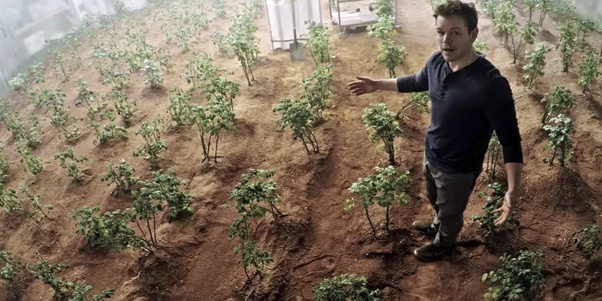
This is what Biosphere 2 is helping us prepare for.
They grew hundreds of trees in an artificial rain forest.
They grew very tall. But then the trees started to fall over.
It turns out, trees gain their strength from the environmental stresses of a natural environment – stresses not provided by Biosphere 2.

When a tree sees wind, the wood stretches a bit, and then strengthens where it stretched forming “reaction wood”.
Lovers of fine furniture and instruments admire a waviness of grain.

Trees also develop deep roots to find water in times of drought, and the deep roots in turn strengthen the tree.
Without these natural stresses, the trees of the Biosphere 2 failed.
They lacked resilience because they had been nurtured in complete comfort. They lacked the stress they needed to develop resilience.