Principle First:
Management /man – ij – ment/ noun. The role responsible for delivering the desired results of an organization.
60% of managers fail in their first 24 months.
82% of them never get training.
There is a correlation here.
Managers are built not born.
Yet so few companies train their managers.
I’ll never understand that.
The training is expensive to develop creating a barrier for small companies. I am building a course now to help. You can click here to simply add yourself to the wait list.
I can only guess large companies fail to train their managers because they point to the 70-20-10 rule which suggests only 10% of learning comes from training. This may be true, but that doesn’t make it dispensable.
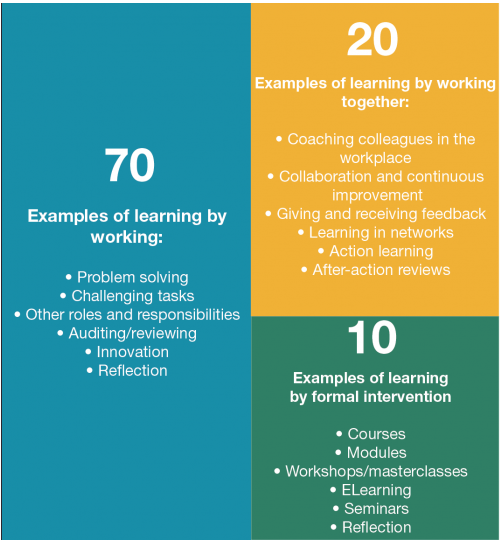
The most difficult transition I’ve had was going from running a team of 20 to a team of 160. I requested training on a particular topic for 2 years. Finally, a 1 hour class was created. And in that 1 hour, I learned everything I needed to know. I never struggled in that topic again.
But that training has not been offered again in the 7 years since.
I cannot explain why large companies do not consistently train their employees in the skills they need to succeed…
If you are a manager, you deserve training.
I’ll tell a counter example in today’s newsletter.
Google has 30,000 managers today.
They all get mandatory training.
It wasn’t always like that.
Google fired all their managers in 2002. They regretted that decision quickly and brought the function back. They realized the decision was based on observations of bad managers who added little value instead of the good managers who added tremendous value.
They set off to determine what makes a manager great.
And then they build a training program to get consistent results out of their managers.
This newsletter describes what they learned.
🧠Today’s Framework: What a manager does
📚Today’s Story: Google’s experiment firing all managers
📝 Today’s Quote:
“A great manager will make a tough job challenging and rewarding. And they’ll make a great job fantastic and transformational.
But a bad manager will make a great job so-so and a tough job soul crushing.”
- Sarah Calderon, Google’s People Developer
📚The Story: Google’s experiment firing all managers
Google was founded in 1998.

In 2002, with just under 700 employees and only 1 humble pop culture reference to date, they decided to remove all of their managers to make a flat organization.

That experiment went poorly and only lasted a few months. They realized management makes a difference.
And they learned not all managers are created equal.
The brought managers back into the business.
And they started asking what separates the good managers from the bad.
In 2006, with >10,000 employees, they hired Laszlo Block to run Human Resources.
Laszlo started running annual 360 degree assessments.
In 2007, they hired Prasad Setty to stand up a “people analytics” group.
In 2009, that HR and People Analytics group stood up “Project-Oxygen” with the goal of finding out what makes a great manager. They looked 10,000 pieces of data from things like performance reviews, 360 reviews, nominations for top-manager awards.
And they concluded a great manager only needs to do two things:
- Get results today
- Develop the team for results tomorrow.
They built a training program to consistently build great managers.
Now, when you become a new manager at Google, they let you struggle for 30-60 days to develop curiosity. And then they pick you up and bring you to mandatory training.
They also provide each manager a coach to ensure their continued development.
How’s that for an adjustment from a bad decision?
🧠The Framework: What a manager does
Google concluded a manager has two main functions:
- Deliver results
- Develop your team
Google also defined 10 behaviors split into these two categories:
Getting results
- Have a clear vision and strategy for the team
- Be productive and results oriented
- Collaborate across the organization
- Be a strong decision maker. Know when to take a decision and when to escalate one.
- Have key technical skills to help advise the team
- Understand the team’s work enough that you can roll up your sleeves and dive in when needed
- Learn new skills to meet the businesses needs.
Developing your team
- Create an inclusive environment and show concern for the success and wellbeing for the people on the team
- Empower the team, don’t micromanage
- Support career development and discuss performance
- Be a good coach
- Be a good communicator
- Communicate about the team
- Communicate about the company
As we’ve discussed before, a Team is a stable group of people, interdependent on a common goal.

Therefore, the team leader’s role is to get better outcomes from the team than the team could have delivered on their own. That’s the value leadership brings: they build a team that works well together and creates the environment for success through coaching and removing barriers.
And as the leader supports the team’s achievement of the shared goal, they balance 1) near term results and 2) growth for the future.
Now I’ll break down the definition of a team to illustrate.
Stable
“Stable” means the group’s members are unchanging and known. Obviously people move in and out your business, and in and out of your team within your business – nothing is ever set in stone. But this happens relatively slowly and team’s membership is always clearly defined.
And this means the team can practice working together – they have time to get to know each other, to learn each others strength and weaknesses, to learn the norms of the team, and improve their collaboration.
This is valuable for success today and success tomorrow.
Interdependent
“Interdependent” means the team must work together to create something no single person could have created. Remember to build psychological safety to get them to work together effectively.
There are only two reasons why you need a team.
Either you need to add people to deliver at Scale, you need to add expertise to deliver your Scope.
Scale:
Say your business is making pizza. You can personally make 1 pizza, or maybe even 10 pizzas. But you can’t make 100 and you can’t do it 7 days a week. Here you’ll add a team to deliver your solution at Scale.
Scope:
Imagine you want to make a special telescope to look at how the universe started (like the James Webb Space Telescope).
But to do that, you need more than the telescope itself. You also need a rocket to send the telescope up into space.
You need a radio system to send the telescope’s pictures and data back to Earth. You know how to make the telescope, but you don’t know how to make rockets or radios.
So, you get help from a team of experts who know how to make rockets and radios. Together, you all work to make the whole project happen.
You are adding a diverse team of specialists to deliver the full Scope of your solution.
Common Goal
Gaining “Alignment” is gaining a common goal.
We build alignment on Finite Goals (Tasks and Projects) and Infinite Goals (Shared Purpose).
This means we need success today, and we need success tomorrow.
This reminds me of this fable from Peter Drucker:
Three stonecutters were asked what they were doing.
The first replied, “I am making a living.”
The second kept on hammering while he said, “I am doing the best job of stonecutting in the entire county.”
The third one looked up with a visionary gleam in his eyes and said, “I am building a cathedral.”
- – Peter Drucker
Three people doing the same job.
Only one can see his daily work in the larger context.
Now imagine if the whole team felt that context.
That is the job of the manager.
Communicate the near term task.
Communicate how it fits into the larger context.
Create a shared sense of purpose.
Get near term results and develop the team.
The Implications on Management
Delegation
A core task of management is delegation.
When we do so, we consider near term success and growth for the future when we ask:
What team skills should I be leveraging?
Know your team including strengths and weaknesses
What team skills should I be developing?
Understand who wants to learn what.
Understand what the future may look like, and develop relevant team skills.
Feedback
A core task of management is feedback.
When we fix people’s substandard work, we do so to get results today. But we sacrifice tomorrow’s results because we teach them to continue producing substandard work.
Silence guarantees nothing will change.
When we give them feedback, we give them awareness of the gap to the standard, and we help them reach it. This gets results today.
Coaching
When we coach people, we bring employee learning to the next level.
As Sir John Witmore says:
“Coaching unlocks people’s potential to maximize their own performance. It is helping them to learn rather than teaching them.”
Hiring
A core task of management is hiring.
Hiring for a short term lens may sacrifice long term success. Especially as the hiring process drags on and a tendency to settle sets in.
When you hire by committee, you spread the pressure to fill the role across more people helping maintain a short and long term focus.
And so on.
Every management task can be executed to get results today and develop the team for results tomorrow.
📕1 Book, 🎧 1 Podcast, 📺1 Video, 📰1 Article
Here’s the best stuff I’ve found while researching this.
📕 Today’s Book
“People with a growth mindset knows that it takes time for potential to flower.”
Reading Carol Dweck’s book Mindset is a prerequisite to attending Google’s manager training. She helps us see how Michael Jordan’s “Growth Mindset” enabled him to take feedback that he wasn’t good enough at shooting, ball handling, and defense to inform a development agenda making him the best in the world at all three areas.
Pardon the Amazon link, the publisher doesn’t have a page anymore. Please buy in your local bookstore. They won’t survive without you.
🎧Today’s Podcast:
“Give managers the feedback they need to get better.”
Sarah Calderon ran Google’s manager training program for years. She describes Project Oxygen and their training program on the Google Partner Podcast. This was in 2017 and it’s been disappearing, sorry for not having an Apple Podcast link – but it’s worth the listen. Listen Online Here: Google HR Secrets: identifying and developing great managers. (33 minutes)
📺Today’s Video:
“The high performance but low trust person is toxic.”
Simon Sinek describes a version of the 2×2 Psychological Safety matrix but as “Performance” and “Trust”. The Navy SEALs would rather have someone of Medium Performance and High Trust than someone as High Performance and Low Trust. I had posted one of my Psych Safety videos on Facebook and a friend sent this as a reply. It’s so good. Watch on YouTube here. (3 minutes)
📰Today’s Article:
“Engineers hate being micromanaged on the technical side but love being closely managed on the career side.”
This article describes Google’s manager training program, and includes several examples of the manager feedback that was used to create it. “How Google Sold It’s Engineers on Management” by David Garvin. Harvard Business Review.

This was extremely resourceful to read. I’ve taken notes to reference later. Thank you for the share Evan!
Thanks for the interest, Alexandria! Google’s work here is so strong. It’s amazing how few have followed their path.