In 2005, Disney Animation was facing an existential crisis.
From 1995 to 2005, the studio had lost nearly $400 million on forgettable films such as Home on the Range , Tarzan, Mulan, and Fantasia 2000.
I’ve seen most of those, but I only barely remember them.
During the same period, Pixar released its first six films—Toy Story, A Bug’s Life, Toy Story 2, Monsters Inc., Finding Nemo, and The Incredibles—achieving over $1 billion in profits.
These films not only succeeded financially but also resonated deeply with audiences, demonstrating the power of compelling storytelling and strong character development.
I’ve seen them all and I remember them all.
Bob Iger, then preparing to take over as CEO, observed Disney’s predicament firsthand at the opening parade for Hong Kong Disneyland. In his memoir The Ride of a Lifetime, Iger recalled noticing a telling absence of memorable Disney characters from recent years.
“There are barely any Disney characters from the last ten years,” he remarked to his colleagues, underscoring the critical challenge facing the company: Disney’s brand had always relied on iconic characters, but its ability to create memorable stories and characters had diminished.
In Iger’s view, Disney had three options:
- Stick with the current management team
- Hire a new management team
- Buy Pixar
By 2006, Disney had chosen the third option, purchasing Pixar for $7.4 billion.
With the acquisition, Pixar’s management team—Ed Catmull and John Lasseter—took charge of Disney Animation, introducing a new vision and culture of creativity that soon yielded dramatic results.
Within a few years, Disney Animation released successful films such as Tangled, Frozen, Zootopia, and Moana, which collectively grossed $3.5 billion on a $700 million production budget.
Pixar’s influence had transformed Disney Animation, reinvigorating its storytelling and commercial success.
What Enabled Pixar’s Success? Vision as a Strategic Framework
The concept of vision in business is often regarded abstract.
At Pixar, vision provided a strategic framework that guided both creative and operational decisions. Pixar’s vision was more than a goal—it was an Infinite Game, a concept that philosopher James P. Carse explores in his book Finite and Infinite Games.
According to Carse, finite games are defined by clear rules, objectives, and an endpoint, while infinite games have no definitive endpoint and are pursued with the goal of sustaining play.
In an organizational context, finite games correspond to specific projects or objectives, while vision is an Infinite Game—a guiding horizon that unifies the organization’s activities around a larger purpose.
This article examines how Pixar’s approach to vision, framed as an Infinite Game, became the cornerstone of its culture and strategy, ultimately transforming Disney Animation’s trajectory.
There are other case studies included and I close with a list of 25 Vision Statements I’ve collected.
Finite and Infinite Games: A Framework for Organizational Vision
James P. Carse’s theory of finite and infinite games provides a useful lens through which to understand Pixar’s approach to vision. In Pixar’s case, vision functioned as an Infinite Game—a purpose that extended beyond any single project or product.
“A finite game is played for the purpose of winning, an infinite game for the purpose of continuing the play.
If a finite game is to be won by someone it must come to a definitive end. It will come to an end when someone has won.”(Carse, 37-39)
The primary role of a CEO is to perpetuate the enterprise. Perpetuate into infinity.
Therefore, the CEO must produce a vision to align every activity of the business around; she must define the Infinite Game, the horizon the business is working towards, but never reaches.
In business, projects and goals are finite games that serve to advance the organization’s Infinite Game: its vision. These are, as Carse says, Finite Games nested within an Infinite Game.
“Finite games can be played within an infinite game, but an infinite game cannot be played within a finite game.”
(Carse, 7.)
For leaders, defining and communicating this Infinite Game is essential to creating alignment and long-term resilience within an organization.
Pixar co-founder Ed Catmull had originally pursued what felt like an infinite goal for over twenty years: to create the world’s first computer-animated film.
After achieving this with Toy Story in 1995, Catmull realized that the finite nature of this goal left him without a larger purpose.
“For twenty years, my life had been defined by the goal of making the first computer graphics movie. Now that that goal had been reached, I had what I can only describe as a hollow, lost feeling. As a manager, I felt a troubling lack of purpose.”
(Catmull, 45.)
This led him to redefine Pixar’s vision as an Infinite Game:
Pixar’s Vision: “At Pixar, our goal is to make great films with great people.”
Pixar’s Mission: “Pixar Animation Studios’ Mission Statement is to combine proprietary technology and world-class creative talent to develop computer-animated feature films with memorable characters and heartwarming stories that appeal to audiences of all ages.”
Pixar’s Guiding Principles: Story is King, Trust the Process
Before this was Codified, Catmull was pursuing a personal dream, and he was able to directly inspire the team who were working on a single film at that time.
This new personal dream, codified in Pixar’s Vision, Mission, and Guiding Principles is aimed at building a sustainable creative culture.
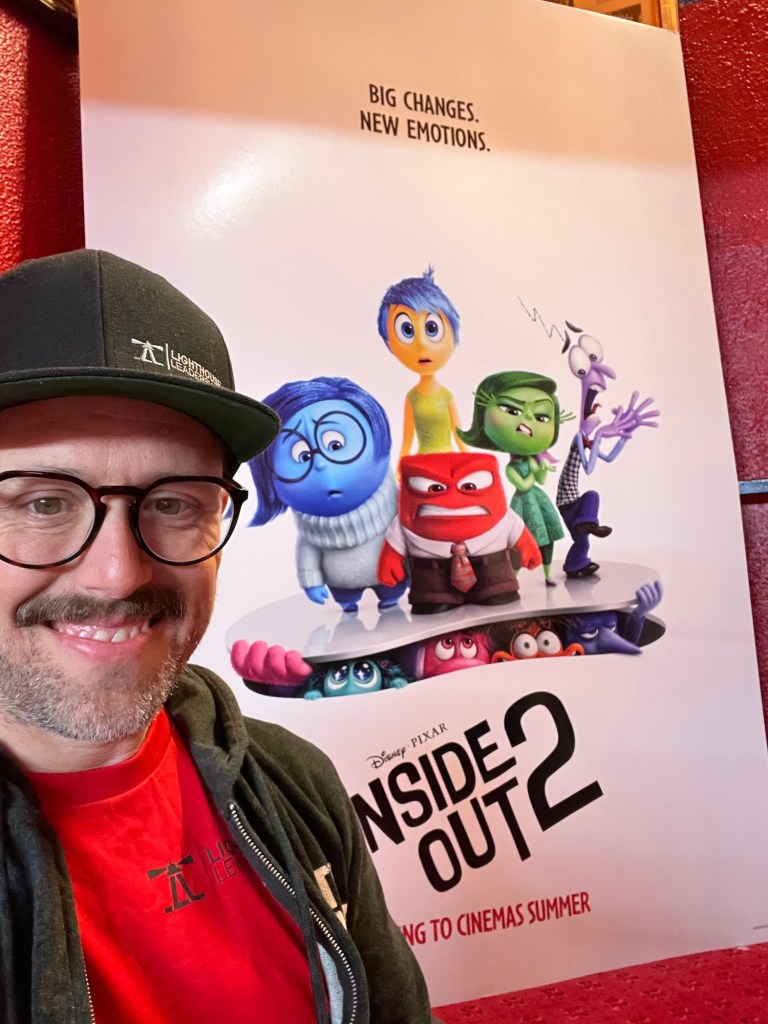
This is an infinite goal, this is a box that will never get ticked. Elemental earns $500M in 2024, Inside Out 2 earns $1.7 billion in 2024, but they plan to do it again with Elio in 2025 into infinity and beyond!
The organization has to be continually inspected, new people are always coming into the business.
Documenting this infinite goal in the form of a Vision and Mission Statement allowed scaling the success up to a larger organization. And this included Disney Animation, to which they applied the Pixar process.
Case Studies: How Vision Drives Sustainable Success
To illustrate how a well-defined vision can transform an organization, let’s examine three case studies: LinkedIn’s focus on global connectivity, Jiminy Peak’s commitment to sustainability, and Pixar’s culture of creativity.
1. LinkedIn: A Vision for Economic Opportunity at Scale
During his tenure as CEO, Jeff Weiner scaled LinkedIn from 33 million to 690 million members and grew annual revenue from $78 million to $7.9 billion. During that time the employee base grew from 338 employees to 16,000.
If we don’t have a codified culture, people will bring their baggage from wherever they came from. If we set up new teams, new locations without a codified culture, the same will happen. It has to be codified. This is particularly important when you’re setting up offices in different countries. Otherwise the leaders setting up those offices will establish their own visions for where they want to take the company – Jeff Weiner
He prepared LinkedIn for scaling by codifying the Mission, Vision, Addressable Opportunity, Strategy, Priorities, Measurable Objectives, Culture, and Values.
I’ll use his definitions of Mission and Vision as he described to a Stanford University course called Blitzscaling in 2015:
Mission (Jeff’s definition): Overarching objective that everyone can participate in. It should be measurable, realizable, and inspirational.
LinkedIn’s Mission: Connect the world’s professionals to make them more productive and successful.
Vision (Jeff’s definition): a dream, it’s True North. If it’s done properly, it’s really something that everyone is reaching for. Doesn’t necessarily get operationalized, it’s a shared sense of purpose.
LinkedIn’s Vision: Create economic opportunity for every member of the global workforce. (3 Billion people)
This infinite goal directed LinkedIn’s product development, organizational expansion, and internal culture.
By aligning every project with the company’s vision, LinkedIn was able to scale effectively while retaining a cohesive purpose.
2. Jiminy Peak: Vision as a Foundation for Sustainability
Ski resort Jiminy Peak, in Hancock, MA has a Vision and Mission Statement:
Vision: Jiminy strongly believes in preserving the earth for future generations. Together we can shape a community for the future.
Mission: To provide positive, memorable Mountain Resort experiences with outstanding, friendly and helpful service in remarkably beautiful surroundings inspiring guests to return again and again. (source)
Too often we read statements like this as touchy-feely. But make no mistake, this is guiding major decisions.
In 2007, Jiminy Peak installed a $4 million wind turbine to reduce its carbon footprint. The decision was significant, representing 20% of its annual revenue, but it aligned with Jiminy Peak’s Infinite Game of preserving the environment for future generations.

The turbine generates 4.6 GWh annually, offsetting 7.1 million pounds of CO2. And it saves $1 million per year in energy costs. This $4 million investment paid for itself in a few years. It’s not only good for the environment, it is good for business.
Jiminy also installed waterless urinals in their buildings. Rarely are toilet selections strategically relevant. Jiminy has dozens of bathrooms these flushless urinals, which they estimate saves nearly 500,000 gallons of water every year. This is enough water to make 1 foot of snow on 3 acres of trail. Just from choosing flushless urinals in service of it’s vision.
By aligning with its vision, Jiminy Peak not only reduced costs but also expanded its brand as a leader in sustainability, eventually creating a new venture to help others pursue renewable energy solutions.
3. The Bill and Melinda Gates Family Foundation
The Bill and Melinda Gates Family Foundation, one of the world’s largest charitable organizations, has a 2024 budget of $8.6 billion. Their 2000 employees operate programs in 130 countries.
Bill and Melinda Gates have given $59.5 billion to the fund since it’s inception. Warren Buffet has given $39.3 billion.
They are united on this infinite goal:
Our mission is to create a world where every person has the opportunity to live a healthy, productive life.
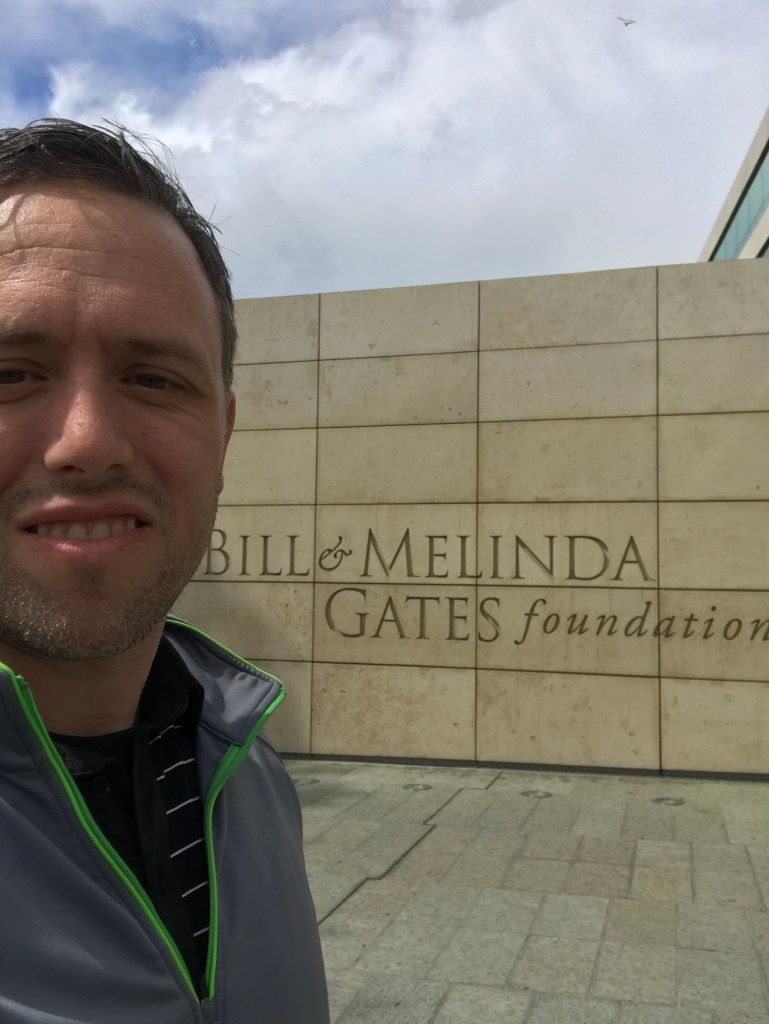
In Brené Brown’s book Dare To Lead, Melinda describes how the Gates Foundation uses their Vision to decide what Finite Goals (projects) they will fund.
“At the (Gates) Foundation, our guiding principle (read: Vision) is equity.
So when we disagree about, say, whether we should spend more on delivering imperfect tools to save lives now, or discovering better tools to save lives later we can always go back to how each of those tactics aligns with the core value of equity.”
– Melinda Gates
(Brown, 212)
If you and I are championing projects which are competing for Gates Foundation grants, we will be discussing why each brings equity. If your project gets funded and mine doesn’t, I’m going to turn to you and ask “how can I help?”.
We may have had competing projects but we are aligned on a higher goal. We have a shared purpose: equity. The intend beyond the position, to use negotiation terms.
That alignment is powerful.
4. Pixar: A Culture of Creativity Aligned with Vision
When Pixar created Toy Story, it marked the fulfillment of Catmull’s original goal to produce the first computer-animated feature film. However, this achievement also created an existential challenge: What purpose would guide Pixar moving forward?
The vision also creates meaning. It creates purpose. And it creates alignment on a common goal.
Pixar points all of it’s resources at this common goal. It’s operationalized.
Pixar’s processes all serve this singular goal of “making great films with great people.”
Catmull responded by redefining Pixar’s vision as an Infinite Game—an enduring purpose of “making great films with great people.” This shift in vision allowed Pixar to cultivate a sustainable creative culture, emphasizing storytelling and collaboration as the foundation of its success. Pixar’s principles, “Story is King” and “Trust the Process,” became guiding tenets for its teams, inspiring continuous innovation and operational excellence. When Disney acquired Pixar, this vision extended to Disney Animation, revitalizing its approach to storytelling and character development.
Operationalizing Vision: Lessons for Leaders
Pixar, LinkedIn, The Bill and Melinda Gates Family Foundation, and Jiminy Peak demonstrate the transformative potential of vision as an Infinite Game. For leaders, defining a clear, enduring vision is a strategic imperative, providing alignment, direction, and resilience.
Key Takeaways for Leaders:
- Define a Clear Vision: Vision should be more than a financial objective. Define a purpose that acts as a “True North,” guiding every team and function within the organization.
- Align Projects with Vision: Every project should serve the company’s Infinite Game. If a project does not advance the vision, reconsider its value to the organization’s strategic direction.
- Codify and Communicate Vision: Codifying vision prevents fragmentation and enables scalability. As LinkedIn’s Jeff Weiner demonstrated, a codified vision provides clarity for teams as they expand across geographies and functions.
- Reassess and Adapt: Vision should be stable but adaptable. Leaders must periodically assess whether the vision aligns with changing market dynamics and organizational needs.
Conclusion
In an increasingly complex business landscape, vision serves as a stabilizing force that enables organizations to maintain focus and coherence.
Pixar’s transformation of Disney Animation illustrates the power of an Infinite Game: a purpose-driven vision that inspires sustained creativity and operational excellence.
As leaders, cultivating a vision aligned with the organization’s core values and long-term objectives is essential to fostering resilience and driving enduring success.
Some other Vision Statement examples
- Adobe: To change the world through digital experiences.
- Airbnb: To help create a world where you can belong anywhere.
- Amazon: To be Earth’s most customer-centric company.
- American Cancer Society: To save lives, celebrate lives, and lead the fight for a world without cancer.
- Bill and Melinda Gates Foundation: To help all people lead healthy, productive lives.
- BMW: To provide premium products and premium services for individual mobility.
- Boeing: To connect, protect, explore, and inspire the world through aerospace innovation.
- Coca-Cola: To inspire moments of optimism and happiness.
- Dove: To make beauty a source of confidence, not anxiety.
- Dropbox: To simplify the way people work together.
- Facebook: To give people the power to build community and bring the world closer together.
- Ford: To drive human progress through freedom of movement.
- Google: To organize the world’s information and make it universally accessible.
- Instagram: To capture and share the world’s moments.
- LEGO: To inspire and develop the builders of tomorrow.
- LinkedIn: To connect the world’s professionals to make them more productive and successful.
- Microsoft: To empower every person and every organization on the planet to achieve more.
- NASA: To discover and expand knowledge for the benefit of humanity.
- Nike: To bring inspiration and innovation to every athlete in the world.
- PepsiCo: To create more smiles with every sip and every bite.
- Pinterest: To bring everyone the inspiration to create a life they love.
- Red Bull: To give wings to people and ideas.
- Starbucks: To inspire and nurture the human spirit—one person, one cup, and one neighborhood at a time.
- Tesla: Accelerate the world’s transition to sustainable energy.
- The Walt Disney Company: To entertain, inform, and inspire people around the globe through the power of unparalleled storytelling.
Sources:
Iger, Robert. The Ride of a Lifetime: Lessons Learned from 15 Years as CEO of the Walt Disney Company. First edition. New York: Random House, an imprint and division of Penguin Random House LLC, 2019
Carse, James P. Finite and Infinite Games: A Vision of Life as Play and Possibility. New York: Free Press, 2012.
Greylock, dir. 2015. Jeff Weiner on Establishing a Plan and Culture for Scaling. Vol. 19. Blitzscaling. Stanford University. https://www.youtube.com/watch?v=cYN3ghAam14.
“LinkedIn’s Series B Pitch to Greylock: Pitch Advice for Entrepreneurs.” n.d. Reid Hoffman (blog). Accessed January 21, 2024. https://www.reidhoffman.org/linkedin-pitch-to-greylock/.
Bill & Melinda Gates Foundation. “About.” Accessed January 26, 2024. https://www.gatesfoundation.org/about.
Brown, Brené. Dare to Lead: Brave Work, Tough Conversations, Whole Hearts. New York: Random House, 2018.
Jiminy Peak. “Sustainability.” Accessed January 21, 2024. https://www.jiminypeak.com/the-mountain/mountain-information/sustainability/.
Lillian, Betsy. “Massachusetts Ski Resort Celebrates A Decade Of Wind Energy.” North American Windpower, August 22, 2017. https://nawindpower.com/massachusetts-ski-resort-celebrates-decade-wind-energy.
Catmull, Edwin E., and Amy Wallace. Creativity, Inc: Overcoming the Unseen Forces That Stand in the Way of True Inspiration. First edition. New York: Random House, 2014.

3 thoughts on “Vision as a Strategic Imperative: How Pixar Transformed Disney Animation”